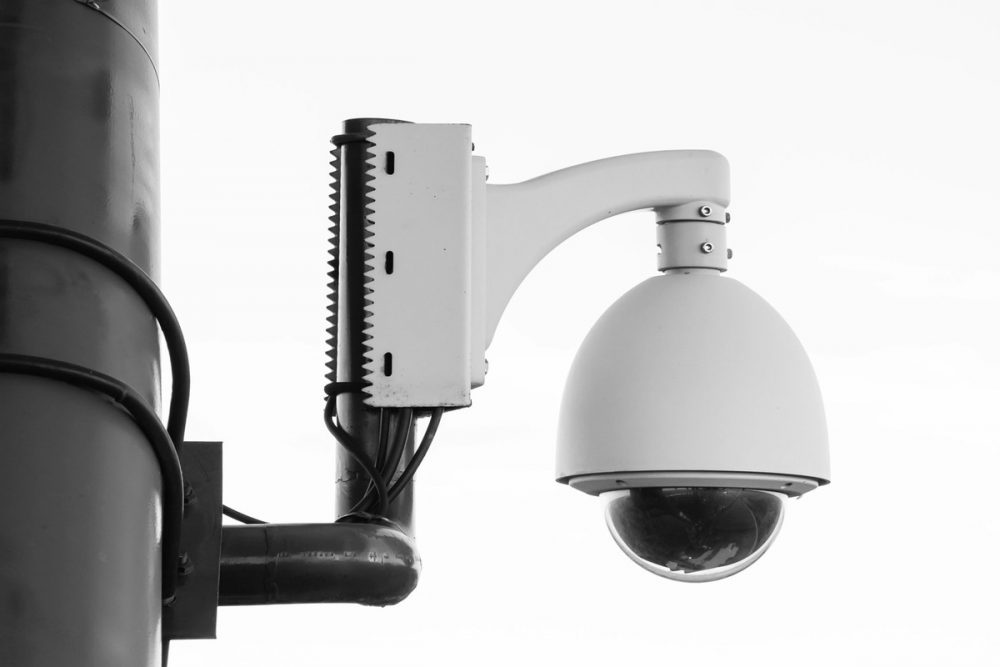
Security camera housing die casting is easier to understand once you look at how a modern network camera is actually built. It is not one metal part. A single outdoor camera is an assembly of a body, a dome or lens ring, a mounting base, brackets, trim rings and small machined fittings, and each of those parts ends up in the process that suits its shape, volume and job.
Table of Contents
What an Outdoor Camera Demands From Its Housing
Cameras installed on buildings, poles and ceilings face conditions that indoor electronics never see:
- Sealing — dust and water ingress ratings (IP66 and above are common for outdoor models) depend on housings with stable sealing faces and gasket grooves
- Heat — image processors and infrared LEDs generate heat in a closed enclosure, so the housing often has to act as the heat path as well as the shell
- EMI shielding — a metal body helps keep interference away from the sensor and network electronics
- Impact and weather resistance — housings are expected to survive UV, temperature swings, and in many installations, deliberate tampering
- Mounting precision — lens seats and mounting faces must stay aligned so the image stays centered and the unit seats cleanly on its bracket
Where Security Camera Housing Die Casting Fits
Complex, enclosed parts that need strength, sealing and heat conduction in one piece are the natural candidates for die casting:
- Camera bodies and dome bases — one-piece shells with internal bosses, ribs and screw posts
- Lens and sensor seats — features that need consistent geometry unit after unit
- Mounting bases and wall or pole adapters — load-bearing parts that must hold position for years
- Heat-dissipating bodies — housings with cooling fins cast directly into the shape
Aluminum is the usual choice for larger bodies and heat-carrying housings, while zinc is used for small, intricate parts where fine detail and thin walls matter. The International Zinc Association’s electronics housing case study gives a useful benchmark: a thin-walled industrial electronics housing cast in Zamak 5 with 1.5 mm walls, where EMI/RFI shielding, dimensional precision and finish were the selection criteria. The same requirements drive security camera housing die casting.
Where Sheet Metal and CNC Take Over
Not every camera part should be cast. Flat brackets, covers and clips are normally stamped or fabricated from sheet metal, because the geometry is simple and the cost per part is low. For more on that side of the build, see why precision sheet metal matters for semiconductor metrology equipment. Small rotating or threaded fittings, collars and pins are usually machined from bar stock. Cast parts also often need a final CNC pass on sealing faces, lens seats and threaded holes, so the casting leaves the die with a machining allowance.
Why the Process Split Matters to Buyers
For security camera housing die casting, and for a procurement team in general, the useful question is not “should the housing be die cast?” but “which parts of this camera belong in which process?” Splitting the design correctly can reduce the number of parts, cut assembly steps and avoid paying machining prices for parts that could be cast. It also helps to have one supplier, or one qualified group of plants, covering all three processes, so that tolerances between a cast body, a stamped bracket and a machined fitting are controlled together rather than discovered at assembly.
EKO runs die casting, precision sheet metal and CNC machining within one group, which is the combination this kind of multi-part product tends to need. For a look at the aluminum side of that capability, see aluminum die casting from fingertip to full size.
A Practical Starting Point
If a camera program is still in design, the best time to review it for security camera housing die casting is before the housing is frozen. Sharing the 3D model, target IP rating, annual volume and finish requirements (powder coat, anodize or paint) lets a supplier flag draft angles, wall thickness, gasket groove design and machining allowances early, and recommend which parts should be cast, stamped or machined. A short DFM review at that stage costs little and prevents the most expensive rework later.