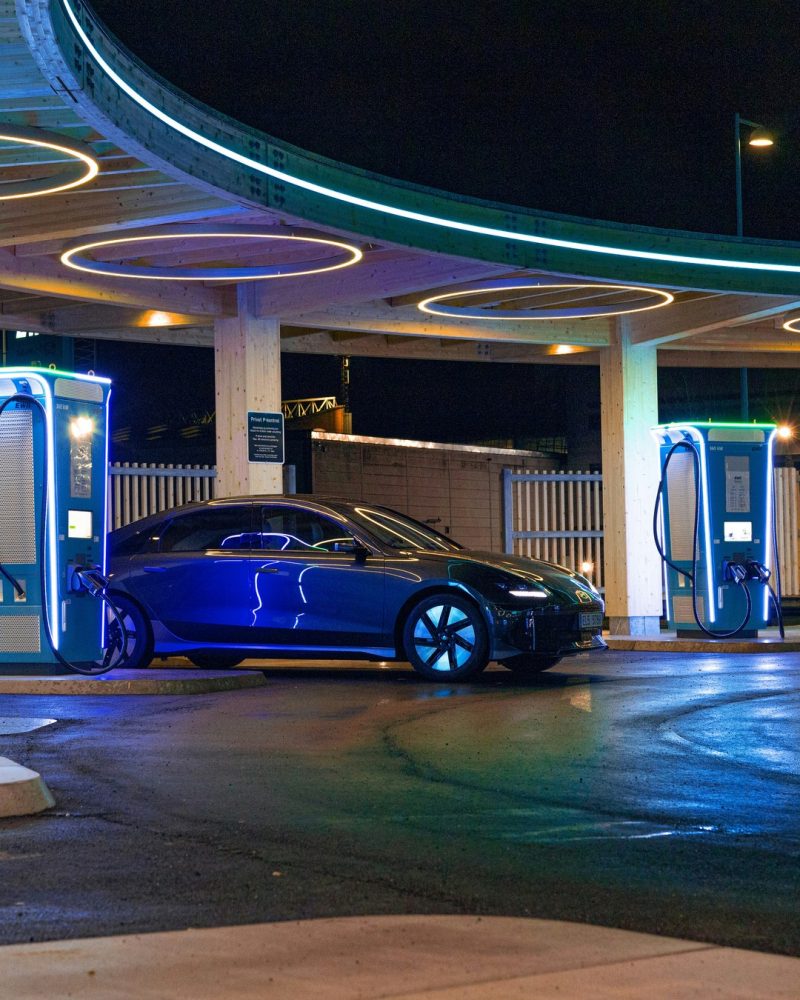
Die casting EV charging components are becoming the preferred choice as global charging infrastructure expands fast — much of it outdoors, in parking lots, along highways, and at curbside stations exposed to sun, rain, humidity, and vibration year-round. As deployment accelerates, the components inside each charger are being asked to do more: survive harsher conditions, dissipate more heat, and maintain tight tolerances over years of daily use.
Table of Contents
Why EV Charging Hardware Demands More From Its Components
Unlike indoor electronics, EV charging equipment lives outside. That changes the design requirements in three ways:
- Corrosion resistance — outdoor exposure over a multi-year service life requires materials that won’t degrade under humidity and temperature cycling
- Thermal management — higher-power fast charging concentrates more heat into a smaller footprint, particularly around connectors and power electronics
- Consumer-facing precision — connector housings are handled daily by end users, so tolerance consistency affects both function and perceived quality
Aluminum die casting addresses all three simultaneously, which is part of why it shows up so consistently in charger housings and connector assemblies.
Key Die Casting EV Charging Components
Charging Connector Housing The connector is the most frequently handled part of any charger, and it’s also the most exposed. A die cast aluminum housing holds tight dimensional tolerances across high production volumes, so plug-in feel stays consistent unit after unit — while the material’s natural corrosion resistance protects the internal contacts from moisture ingress.
Charger Enclosure Full charger enclosures are typically large, structurally demanding parts. Die casting allows these to be produced as a single, near-net-shape structure rather than an assembly of multiple stamped or welded pieces, which reduces the number of seams and joints where water or dust could eventually find a way in.
EMI Shielding Components Power electronics inside a charger generate electromagnetic interference that needs to be contained. Aluminum’s inherent conductivity means a die cast enclosure can serve as both the structural housing and the EMI shield in the same part, rather than requiring a separate shielding layer.
Cable Management Brackets These brackets carry mechanical load daily as cables are plugged, unplugged, and coiled, often in direct sunlight. Die cast aluminum resists the fatigue and UV degradation that can affect molded plastic alternatives over time.
Die Casting vs. Other Processes for This Application
Sheet metal fabrication can produce charger enclosures, but typically requires more secondary joining operations — the same one-piece, fewer-joints logic that makes die casting a strong fit for sealed thermal enclosures in data center cooling applications applies just as directly to outdoor charging hardware. Injection-molded plastics are lighter and cheaper for non-structural covers, but fall short on both heat dissipation and long-term UV/impact resistance for structural or thermally critical parts.
A Design-for-Manufacturing Consideration
As with any die cast component, wall thickness, draft angle, and gate placement decisions made early in the design phase directly affect tooling cost and long-term part quality. Getting these right before tooling is cut is especially important for charging hardware, where field failures are costly to service.
The Infrastructure Growth Behind the Demand
The scale of this shift is significant. According to industry tracking data, global public EV charging infrastructure reached over 4.8 million stations as of May 2026, up more than 25% from the previous year, with fast-charging deployment accelerating as battery capacity and charging speeds increase. That growth curve is exactly what’s driving demand for charger components that can hold up to sustained outdoor use at scale.
For manufacturers and OEMs building the next generation of EV charging hardware, die casting offers a proven path to components that are structurally sound, thermally capable, and consistent at volume. As charging networks scale from thousands to millions of installed units, that consistency becomes just as important as any single component’s individual performance — a supplier’s ability to hold tolerance across high-volume production runs directly affects field reliability and long-term maintenance costs across an entire network.